Maryadi Farm: A Warm Script Font for Makers
I had a stack of brown kraft candle labels spread across my worktable, the soft scent of vanilla and cedar still lingering from the last pour. The wax was set, the jars were spotless, but the empty space where the product name should sit felt lifeless. I pulled up my font library, scrolled through dozens of clean sans serifs and stiff serifs, and then landed on Maryadi Farm. The moment I typed “Meadow & Wick” and saw those flowing, slightly rustic letterforms curve against the textured label stock, the whole package came together. That’s the thing about a well-chosen script font—it doesn’t just spell a word, it tells a feeling.
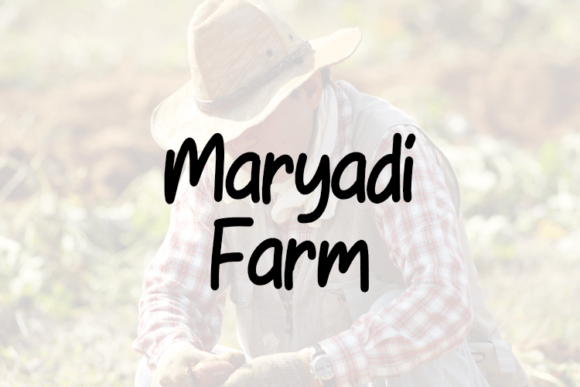
Maryadi Farm is a script amp style typeface that carries a distinct hand-lettered warmth without losing its polish. Its strokes have a gentle bounce, with soft connections and just enough variation in weight to feel authentic, like something you’d find on a vintage farm sign or a carefully penned note. The personality is approachable, charming, and undeniably creative. It’s not overly formal, nor is it sloppy—it lands in that sweet spot where a premium font meets down-to-earth practicality. For makers like me, who spend hours perfecting the smallest details of product presentation, that balance is everything.
The First Test: Designing a Candle Label That Feels Real
When I’m working on a new product line, the font I choose sets the entire mood before the customer even touches the item. For this candle label, I needed something that felt sophisticated enough for a boutique shelf but personal enough to suggest the product was made by hand. Maryadi Farm transformed the plain text into a focal point. I used it for the scent name in a large, sweeping script, then paired it with a clean sans serif font for the weight and burn time details. The contrast worked beautifully—the script drew the eye first, while the secondary text stayed readable and functional.
One thing I noticed immediately was how the letterforms interact with different materials. On textured kraft paper, the slightly organic edges of the font look right at home. On glossy label stock, the curves appear more refined, almost like a modern calligraphy piece. If you’re preparing mockups for your shop, Maryadi Farm photographs exceptionally well, especially when you enlarge the text for a hero image. The subtle details—the way the ‘f’ descenders loop, the gentle slant of the ‘y’ tail—give your product labels a custom, hand-drawn feel that’s hard to replicate with mass-produced fonts.
Bringing Maryadi Farm into Your Handmade Shop
Beyond candle labels, I’ve been experimenting with this creative font across a range of products. For a recent batch of wedding invitation suites, I used Maryadi Farm for the couple’s names on the main card. The flowing script added a romantic, garden-party feel that worked perfectly with floral envelope liners and wax seals. When I designed a coordinating set of thank-you tags for the same client, the font kept the brand identity consistent—every piece felt like it belonged to the same thoughtful story.
Stickers and decals are another area where this typeface shines. I cut a few test sheets on my Cricut, setting the font to a slightly larger size for a “Hello Sunshine” decal. The cuts were clean, though I learned quickly that very small, intricate script details can be finicky with cutting machines. For intricate designs, I recommend sizing up or using a bolder weight if available, and always doing a test cut before running a full sheet. The same applies to printable wall art—Maryadi Farm looks gorgeous on a digital download, but if you’re offering it as part of a template, remind customers to print at high resolution so those delicate strokes stay crisp.
For clothing and tote bag designs, I found the font adds a personal, curated touch. I mocked up a simple “Farm Fresh” design on a canvas tote, and the script gave it the look of a hand-painted sign. When using heat transfer vinyl, I noticed that the natural spacing of the letters prevented the design from feeling too tight or crowded, which is a common issue with some script fonts. The result is a merchandise piece that feels intentional and giftable.
Seasonal Projects and Packaging Magic
As the seasons shift, my shop’s focus moves from everyday items to holiday-specific goods. Last week, I prepared a batch of Christmas gift tags using Maryadi Farm for the “To” and “From” lines. The font’s casual elegance made simple brown paper packages look like something from a holiday market. I also tested it on a digital download for a “Gather Here” Thanksgiving sign, where the script’s warmth echoed the sentiment of the phrase perfectly.
Packaging design is where I see the most transformative power in this font. A simple tissue paper wrap with a sticker bearing your shop name in Maryadi Farm instantly elevates the unboxing experience. The handwritten font quality suggests care and personal attention, which can affect how a customer perceives the overall value of your product. I’ve noticed that when I use this typeface for my boutique tags, the whole presentation feels more cohesive—the font becomes a quiet part of the brand identity that customers begin to recognize.
Pairing and Readability for Real-World Products
While Maryadi Farm is stunning as a display font, it’s not meant for long paragraphs of text. I use it almost exclusively for short phrases, names, titles, and decorative wording. For product labels with ingredient lists or care instructions, I always pair it with a clean sans serif or a simple serif font. The combination keeps the design legible while still allowing the script to do the heavy lifting on the emotional appeal. One of my favorite pairings is a light, modern sans serif with slightly condensed letterforms—it creates a lovely tension between the organic script and the structured supporting text.
If you’re designing for small stickers or tiny hang tags, pay attention to the stroke contrast. In smaller sizes, the thin parts of the letters can start to disappear, especially when printed on absorbent paper. For those applications, I increase the font size slightly or use the font for a single initial or monogram rather than a full word. For digital downloads and printable planner pages, I’ve used Maryadi Farm for the month headers and section titles, leaving the grid and schedule details to a straightforward, readable typeface. This approach keeps the design functional while still injecting personality.
Technical Considerations for Makers and Sellers
Before you commit to using Maryadi Farm for your next product launch, there are a few practical things to check. First, look at the included styles and any extras like alternates, ligatures, or swashes. These can dramatically expand your design options, allowing you to customize the way letters connect or add decorative flourishes to the beginning and end of words. I often use swashes on the first letter of a name on an invitation or a welcome sign—it adds a bespoke, editorial design quality that feels elevated.
File format matters too. Whether you’re installing on a desktop for design software or using it with a cutting machine, make sure the font format is compatible with your workflow. I’ve used it in both Silhouette Studio and Adobe Illustrator without issues. Additionally, if you sell your products internationally, check for multilingual support. The last thing you want is to find out that a special character is missing when you’re halfway through a client’s order.
One of the most important steps is confirming the commercial font licensing terms. If you’re selling physical products, creating digital downloads, or offering templates, you need to ensure the license covers your specific use. I always read the EULA carefully, especially for anything that will be sold as an SVG-style design or embedded in a printable template. Clearing this upfront protects your small business and gives you peace of mind to create freely.
Making the Font Your Own
The real joy of working with a font like Maryadi Farm is how it invites you to play. I’ve used it on a whim for a last-minute birthday banner, printed on cardstock and strung with twine, and it looked like I’d spent hours hand-lettering. I’ve tucked it into a social media graphic for a shop update, and the engagement felt more personal, more connected to the story I was telling. The font doesn’t demand a specific aesthetic—it adapts to farmhouse signs just as easily as it does to modern wedding stationery or playful kids’ party invitations.
When I’m building a new product line, I often start with the font. I’ll type out every word I’m considering, from “Lavender & Linen” to “You Are Magic,” and watch how the letterforms interact. With Maryadi Farm, I rarely need to adjust much. The built-in character does the heavy lifting, and all I have to do is choose the right paper, the right color, and the right moment to share it. For any maker who wants their products to feel like a warm hello, this typeface is a quiet, powerful tool in the creative arsenal.